
Routing number: Find Your Bank’s Routing Number and Learn How It Works
Looking for a specific bank?
In US Banks
What is a Routing Number and How Does It Work?
A routing number is a unique nine-digit number used to identify a financial institution in the United States. It helps the banks and payment networks to determine where a transaction should be sent. You will often be asked for a routing number along with your bank account number.
When you make a payment your money moves electronically between financial institutions that contains information needed to route the funds directly.
Routing numbers are commonly used for:
- Direct Deposit
- ACH payments and transfers
- Automatic bill payments
- Domestic wire transfers
- Other electronic transactions
The routing number you need depends on your bank account and the type of transaction. If you are unsure which number to use, check your bank’s instructions before submitting a payment.
512+
Banks Routing numbers provided.
25+
Years of experience with proud
1120+
Revenue in 2017 investment
50k+
Satisfied customers
When Do You Need a Routing Number?
Banks need a standardized way to identify financial institutions when processing payments. You may be asked for a routing number when you are:
- Setting up direct deposit with an employer
- Receive certain electronic payments
- Make an ACH payment
- Set up automatic payments
- Link a bank account to another financial service
- Complete domestic transfers
The information required varies by the type of transaction. A bank or payment provider may ask you for additional details such as your account number, account type, or any other banking information.
Where Can You Find Your Routing Number?
Finding your routing number is usually very easy and simple process. Here are the most common places to look.
Check a Paper Check
If you have a personal check issued by your bank, look at the bottom left corner followed by your account number. Because the numbers can look similar, check them carefully before using them.
Check Your Banking App
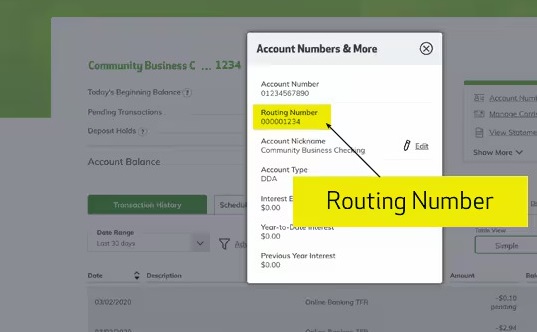
You may find your routing number by opening your checking or savings account details in your mobile app. If you cannot find it, search the bank’s help section or contact the bank directly.
Sign In to Online Banking
Most banks display routing information within your online banking account. Look for sections- Account details, Account information, Routing and account numbers, or direct deposit information. The exact location depends on your bank.
Look at your Bank Statement
The location and format vary between banks; some bank statements include routing information in the summary section at the top. If the number is not shown, contact the customer service department to help you find it.
Ask Your Bank
If you are setting up an important payment or transfer and are unsure which routing number applies, contact your bank and ask for the correct number because the routing number used for wire transfer can differ from an ACH transaction.
Bank Website
Many financial institutions publish routing numbers by state, account type, or transaction type to help customers find the correct information. Always confirm that you're visiting the official bank website before using any routing number for payroll, tax refunds, bill payments, or wire transfers.
Banks Routing Number Guide
Bank Name | Routing Number | Detailed Guide |
Wells Fargo | Verify by account/ Type of Transaction | |
Bank of America | Verify by account/ Type of Transaction | |
JP Morgan | Verify by account/ Type of Transaction | |
First Horizon | Verify by account/ Type of Transaction | |
Citibank | Verify by account/ Type of Transaction | |
State Street Bank | Verify by account/ Type of Transaction | |
BMO Bank | Verify by account/ Type of Transaction | |
American Express | Verify by account/ Type of Transaction | |
TD Bank | Verify by account/ Type of Transaction | |
Charles Schwab | Verify by account/ Type of Transaction | |
Key Bank | Verify by account/ Type of Transaction | |
Routing Number vs Account Number vs SWIFT Code
Identifier | What if identifies | Typical Use |
Routing Number | A U.S. financial institution | ACH, direct deposit, and other domestic transactions. |
Account Number | Your individual bank account | Identifying the account receiving or sending funds. |
SWIFT code | A financial institution for international transactions | International transfers |
5 Common Routing Number Mistakes You Should Avoid
Using the wrong banking information can cause a payment to be delayed or rejected. Before submitting
your information always check for these common mistakes:
1. Using the account number instead of the routing number as both these numbers look similar
and can be confusing sometimes.
2. Using an outdated number, banks can change their routing arrangements so always verify when
necessary.
3. Assuming every transaction uses the same routing number, ACH and wire transfer instructions
can differ.
4. Copying information from an unverified source, it is worth to confirm with the bank directly.
5. Entering fewer or more than nine-digits.
Final Thoughts
A routing number is a nine-digit code that identifies a U.S bank or credit union. Knowing how routing numbers work can make everyday banking easier. Whether you are setting up direct deposit, making an ACH transfer or other electronic transaction. Using the right information helps ensure funds reach the right destination. If you are looking for a specific bank’s routing information, check our bank directory to find your corresponding bank page.
About the Author
James writes about consumer banking and personal finance, focusing on making everyday banking information easier to understand. Content is researched and reviewed for accuracy and updated when relevant information changes.
Request a Quote
Learn More From
Frequently Asked Questions
A routing number is a nine-digit code that identifies a U.S bank or credit union for financial transactions.
You can find it on paper check, in your bank’s online banking system or mobile app, on bank statement, or by contacting your bank directly.
No, each bank uses a different routing number. The number varies depending upon the bank, its branch and the account type.
Yes, you do need a routing number for both direct deposit and ACH transfer. Note that many banks can have different routing numbers for both these transactions.
Yes, you may need a routing number along with a SWIFT code and other banking information for making an international transfer.
A routing number is not a password or a PIN. So yes you can share your routing number where needed.